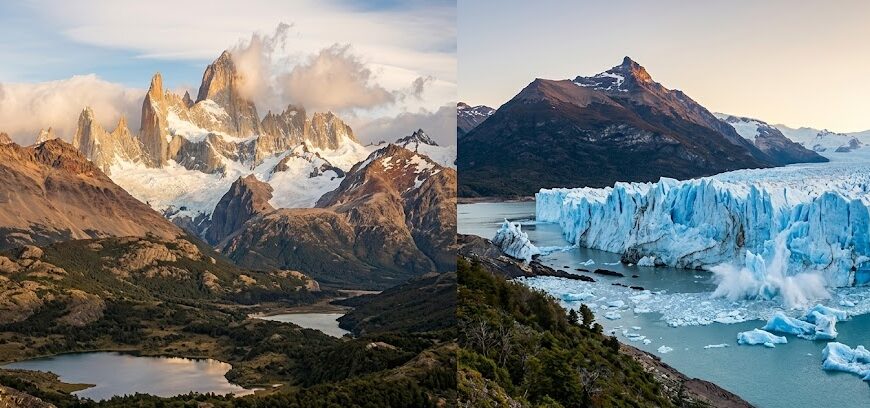
Patagonia: Where to Go in Chile and Argentina (Ultimate Guide)
Disclaimer: This post may contain affiliate links, meaning we earn a small commission if you make a purchase through our links, at no additional cost to you. As an Amazon Associate, I earn from qualifying purchases.
If you have already experienced the geothermal wonders of touring Yellowstone National Park or enjoyed the lush biodiversity of eco-tourism in Costa Rica, you might be searching for the next ultimate frontier. Look no further than the southern tip of South America. However, planning a trip here introduces a massive logistical challenge: deciding exactly patagonia where to go.
Patagonia is not a country; it is a colossal geographical region shared by Chile and Argentina, covering over 400,000 square miles of untamed wilderness. It is a land of towering granite spires, advancing blue glaciers, sweeping steppes, and fierce winds. Because distances are massive and infrastructure can be sparse, attempting to “see it all” in a single one-week trip is a recipe for exhaustion. In this comprehensive guide, we will break down the highlights of both the Argentine and Chilean sides to help you craft the perfect adventure at the end of the world.
📌 Key Takeaways (TL;DR)
- Argentina for Glaciers and Day Hikes: Head to El Calafate for the massive Perito Moreno Glacier and El Chaltén for world-class day hikes with immediate town access.
- Chile for Multi-Day Trekking: Torres del Paine offers the famous W Trek, providing a rugged, deep-wilderness experience that requires advance camping permits.
- The End of the World: Ushuaia (Argentina) is the southernmost city, perfect for penguin watching and embarking on Antarctica cruises.
- Timing is Everything: The best window to visit is between late November and early March to avoid severe winter closures and freezing conditions.
You’ll see…
Understanding the Divide: Chile vs. Argentina
The Andes mountain range acts as a natural border, perfectly splitting Patagonia down the middle. This geological spine creates two vastly different landscapes and travel experiences.
The Argentine side consists largely of the arid Patagonian steppe. It is characterized by vast, desert-like plains that abruptly crash into the towering eastern slopes of the Andes, creating dramatic glaciers and jagged peaks. The infrastructure here is generally more developed for quick tourist access.
The Chilean side is battered by the moist winds of the Pacific Ocean. As a result, it is a labyrinth of deep fjords, temperate rainforests, and islands. It feels wilder, greener, and requires a bit more rugged navigation, making it a paradise for hardcore trekkers.
Argentine Patagonia: The Land of Glaciers and Peaks
If you want to witness massive blocks of ice exploding into freezing lakes and hike the most iconic jagged mountains on the continent, Argentina is your primary target.
El Calafate and the Perito Moreno Glacier
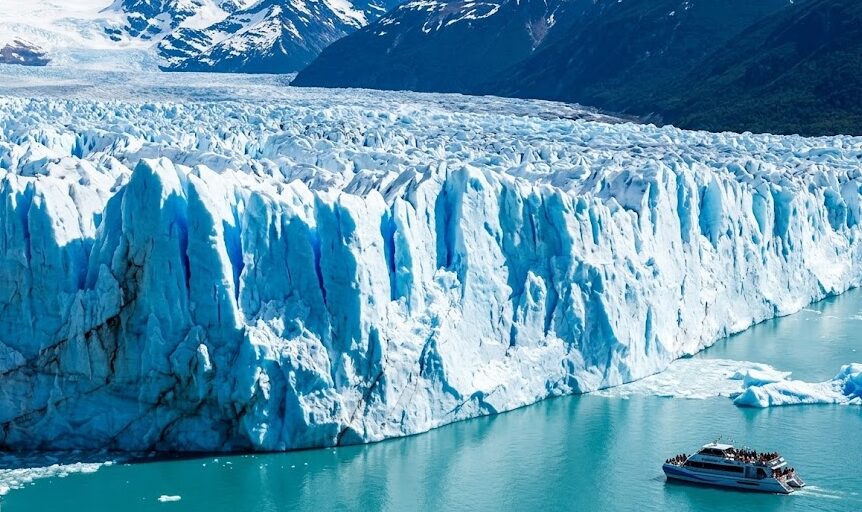
El Calafate serves as the gateway to Los Glaciares National Park. The undisputed star of this region is the Perito Moreno Glacier. Unlike most glaciers on Earth that are rapidly retreating due to climate change, Perito Moreno is one of the rare ice fields that is actually in a state of equilibrium.
Visitors can walk along miles of perfectly constructed steel boardwalks to view the 200-foot-tall wall of ice. For the adventurous, booking a “mini-trekking” tour allows you to strap crampons onto your boots and physically hike across the undulating surface of the glacier itself.

El Chaltén: The Trekking Capital of Argentina
Just a three-hour drive north of El Calafate lies the small, bohemian village of El Chaltén. If you are looking for world-class hiking without the need for expensive multi-day camping permits, this is the best destination in Patagonia. You can step out of your hotel door and immediately access the trailheads for iconic day hikes like the Laguna de los Tres (which brings you face-to-face with the legendary Mount Fitz Roy) and the Laguna Torre.
Chilean Patagonia: The Wild Frontier
For those seeking a raw, remote, and physically demanding immersion into nature, crossing the border into Chile delivers an unforgettable experience.
Torres del Paine National Park
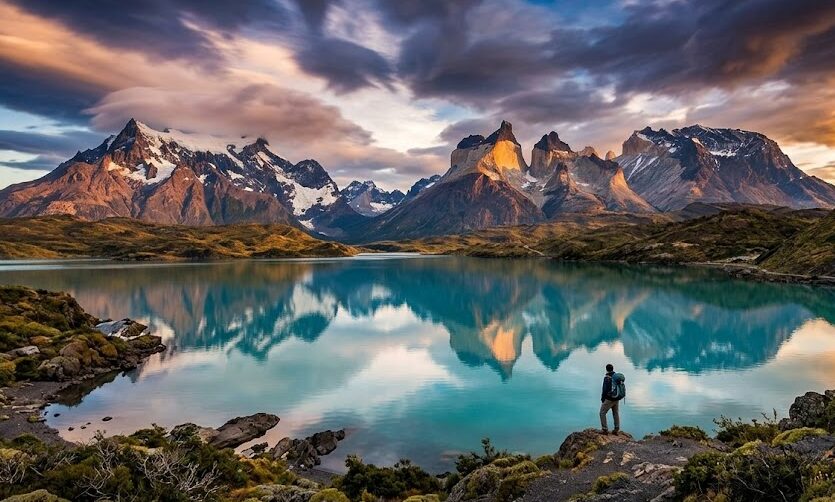
When people search for patagonia where to go, the images that usually pop up on their screen are the three distinct granite horns of Torres del Paine. This national park is arguably the crown jewel of the entire region.
It is most famous for the “W Trek” (a 4-to-5-day route) and the “O Circuit” (an 8-to-10-day route). Hiking here takes you past electric-blue glacial lakes like Lago Pehoé, through dense Lenga forests, and alongside the massive Grey Glacier. However, logistics here are challenging; you must book your campsites or refugios (mountain lodges) many months in advance, as independent, permitless camping is strictly prohibited to protect the fragile ecosystem.
The Carretera Austral
If you prefer a road trip over a hiking trip, the Carretera Austral (Route 7) in northern Chilean Patagonia is the ultimate scenic drive. Stretching over 770 miles, much of it unpaved, it winds through untouched rainforests, hanging glaciers (like the Queulat Hanging Glacier), and the surreal Marble Caves of General Carrera Lake.

Tierra del Fuego: The End of the World
If you continue traveling as far south as the continent will allow, you will reach the Tierra del Fuego archipelago. Divided between both Chile and Argentina, this is the jumping-off point for expeditions to Antarctica.
The Argentine city of Ushuaia claims the title of the “Southernmost City in the World.” Here, you can navigate the historic Beagle Channel, walk among colonies of Magellanic penguins on Isla Martillo, and explore the windswept landscapes of Tierra del Fuego National Park. It is an incredibly popular destination if you are researching the best places to travel in December, as the southern hemisphere summer provides the warmest and most accessible conditions for this extreme latitude.
How to Choose Your Route
When deciding patagonia where to go, your itinerary should be dictated by your timeframe and travel style:
- If you have 7 days: Pick one country. Fly into El Calafate (Argentina) to see the glacier and hike Fitz Roy, OR fly into Puerto Natales (Chile) to do the W Trek.
- If you have 14 days: You can do the classic “Southern Circuit.” Rent a car or take buses from El Calafate to El Chaltén, then cross the border south into Chile to experience Torres del Paine.
- If you love road trips: Skip the crowded southern parks entirely and drive the wild Carretera Austral in Chile.
Stanley Classic Legendary Vacuum Insulated Thermos
There is a reason every local guide in Argentina and Chile carries one of these. When you are sitting in front of the Perito Moreno glacier freezing in the wind, a cup of boiling hot coffee or traditional South American Mate is life-changing. This practically indestructible thermos will keep liquids piping hot for up to 24 hours in the harshest Patagonian conditions.
Check Current Price on AmazonFrequently Asked Questions About Visiting Patagonia
When is the best time to visit Patagonia?
The best time to visit is during the Southern Hemisphere summer, from late November to early March. During this window, the weather is the warmest, the days are extremely long (up to 18 hours of daylight), and all trails and transport networks are fully open.
How many days do you need in Patagonia?
You need an absolute minimum of 7 to 10 days. Because flight times are long and the distances between major attractions (like Perito Moreno and Torres del Paine) require full days of bus or car travel, shorter trips will leave you exhausted and rushed.
Is it safe to hike in Patagonia without a guide?
Yes, it is very safe for experienced hikers. The major trails in El Chaltén and Torres del Paine are extremely well-marked and heavily trafficked during the high season. However, the weather is notoriously unpredictable, so proper gear and preparation are mandatory.
How cold does Patagonia get in the summer?
Even in the peak of summer, temperatures can drop to 40°F (5°C) at night and rarely exceed 65°F (18°C) during the day. The biggest factor is the Patagonian wind, which can gust up to 70 mph, making the ambient temperature feel significantly colder.