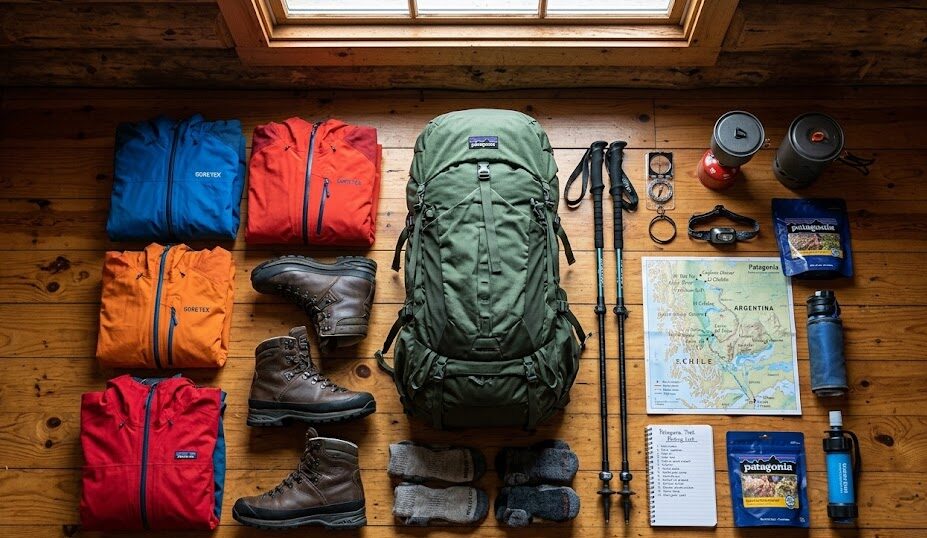
The Ultimate Patagonia Trekking Packing List (Expert Gear Guide)
Disclaimer: This post may contain affiliate links, meaning we earn a small commission if you make a purchase through our links, at no additional cost to you. As an Amazon Associate, I earn from qualifying purchases.
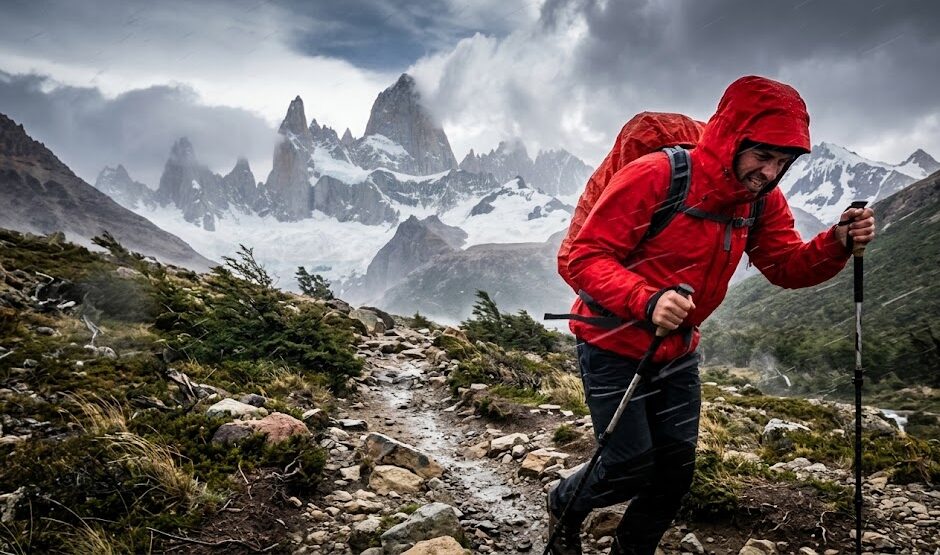
Preparing for a trip to the southern tip of the Andes is completely different from packing for a tropical vacation centered around eco-tourism in Costa Rica or planning for the arid, scorching heat of the Gobi Desert in Mongolia. Down here, the weather is fiercely independent and notoriously unpredictable. When you step onto a trail in Patagonia, you must be prepared to experience warm sunshine, freezing rain, horizontal sleet, and 70 mph wind gusts—all within a single four-hour hike.
Whether you are tackling the famous multi-day W Trek in Chile’s Torres del Paine or embarking on spectacular day hikes around Argentina’s Mount Fitz Roy, your comfort and safety rely entirely on what is inside your backpack. The secret to surviving and thriving in this brutal environment is mastering the art of layering.
In this comprehensive patagonia trekking packing list, we will break down the exact gear you need to stay dry, warm, and blister-free at the end of the world.
📌 Key Takeaways (TL;DR)
- No Cotton Allowed: Stick entirely to Merino wool and synthetic fabrics for your base layers. Cotton stays wet and will cause you to freeze in the fierce winds.
- The Outer Shell is King: The most important investment you can make is a high-quality, 100% windproof and waterproof Gore-Tex hardshell jacket.
- Protect Your Feet: Waterproof hiking boots with strong ankle support are mandatory. Break them in for weeks before arriving to prevent trip-ending blisters.
- Save Your Knees: Trekking poles are essential for stability against strong wind gusts and protecting your joints on steep, rocky descents.
You’ll see…
Mastering the Layering System
The golden rule of outdoor survival in extreme environments—whether you are hiking glaciers or tackling multi-week Japan cycling routes in the mountains—is avoiding cotton. Cotton absorbs sweat, loses its ability to insulate when wet, and takes forever to dry. If you wear a cotton t-shirt under your jacket in Patagonia, you will freeze. You must stick strictly to synthetic moisture-wicking fabrics or Merino wool.
1. The Base Layer (Moisture Management)
Your base layer sits directly against your skin. Its primary job is to pull (wick) sweat away from your body so you do not become cold when you stop moving.
- What to bring: 2 to 3 long-sleeve Merino wool or synthetic tops, and 1 to 2 pairs of thermal leggings (long johns). Merino wool is naturally odor-resistant, meaning you can wear the same shirt for multiple days on the W Trek without smelling terrible.
2. The Mid Layer (Insulation)
This layer traps your body heat. Because Patagonian mornings are freezing but afternoons can be surprisingly warm, this layer needs to be easily removable.
- What to bring: A high-quality fleece jacket or a lightweight, packable down puffer jacket (synthetic down is highly recommended, as natural down loses its insulating power if it gets wet).
3. The Outer Shell (Weather Protection)
This is the most critical piece of clothing on your patagonia trekking packing list. The Patagonian wind is legendary; it can physically blow you off balance and cut straight through thick sweaters.
- What to bring: A premium Gore-Tex (or equivalent) hardshell jacket that is 100% windproof and waterproof. Do not bring a cheap plastic poncho; the wind will rip it to shreds in minutes. You should also bring a pair of lightweight waterproof rain pants to pull over your trekking trousers during sudden downpours.

Essential Footwear
You can survive wearing the same shirt for a week, but if your feet are destroyed on Day 1, your entire trip is over. The trails in Los Glaciares and Torres del Paine are notoriously rocky, steep, and often cross through deep mud and glacial streams.
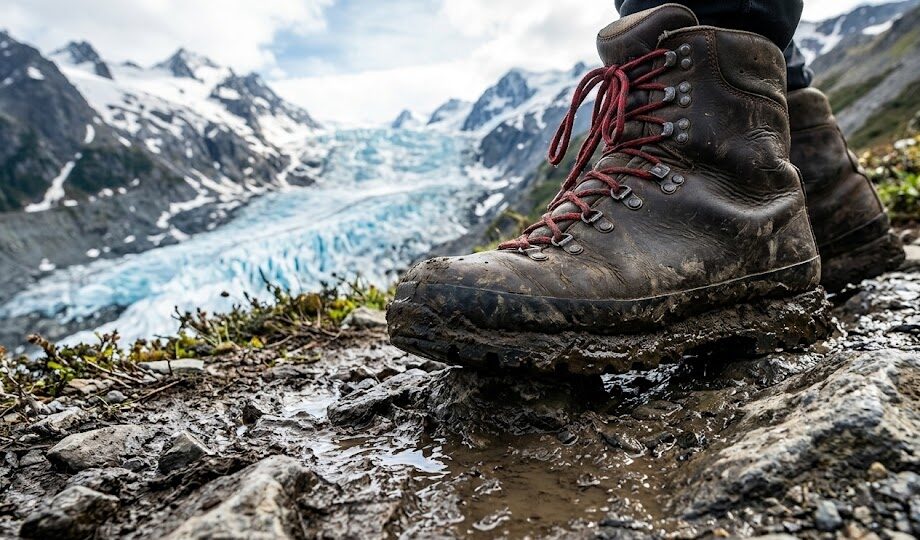
- Trekking Boots: You need mid-to-high ankle support to navigate the uneven terrain, and they must be Gore-Tex/Waterproof. Crucial tip: Never bring brand new boots to Patagonia. Buy them months in advance and break them in thoroughly before your flight.
- Camp Shoes: After hiking 15 miles, you will want to take your heavy boots off immediately. Bring a pair of ultra-lightweight sandals (like Crocs or Tevas) to wear around the campsite or refugio while your boots dry out.

Hardware and Camping Gear
If you are doing day hikes from El Chaltén and sleeping in a warm hotel bed every night, a standard 20L to 30L daypack is sufficient. However, if you are doing a multi-day circuit in Chile, your hardware needs to be expedition-grade.
- The Backpack: A 50L to 65L internal frame backpack is required for multi-day treks. Ensure it comes with a built-in waterproof rain cover.
- Trekking Poles: These are not optional for Patagonia. The relentless steep descents over loose scree (small rocks) will destroy your knees. Trekking poles absorb up to 25% of the impact and provide vital stability when strong wind gusts try to knock you off balance.
- Sleeping Bag: Even in the peak of summer (January), nighttime temperatures drop near freezing. You need a sleeping bag comfort-rated to at least 15°F (-9°C).
Electronics and Accessories
Batteries drain significantly faster in cold weather. Keeping your electronics alive requires a bit of strategy.
- Power Bank: Bring a high-capacity (20,000mAh) portable charger. Keep it inside your sleeping bag at night so your body heat prevents the battery from draining in the cold.
- Universal Adapter: Chile and Argentina use different plug types (Type C/L in Chile, Type I in Argentina). A universal travel adapter is mandatory if you are crossing the border.
Black Diamond Spot 400 Headlamp
If you plan to hike up to the base of the Torres at 4:00 AM to catch the famous sunrise, you will be climbing steep, treacherous rocks in pitch-black darkness. Holding a smartphone flashlight is incredibly dangerous. This powerful, waterproof headlamp leaves your hands free to use your trekking poles and casts a brilliant beam to safely guide your footing.
Check Current Price on AmazonFrequently Asked Questions About Packing for Patagonia
Do I need a sleeping bag if I stay in the Refugios?
It depends on your booking. If you book a “fully made bed” at a Chilean refugio, they provide blankets and sheets. However, if you book a basic mattress or are camping on the refugio grounds, you must bring your own high-quality sleeping bag.
Can I rent camping gear in Patagonia?
Yes, you can rent almost everything. Towns like Puerto Natales (Chile) and El Chaltén (Argentina) have dozens of rental shops offering tents, sleeping bags, trekking poles, and even cooking stoves. This is a great option if you do not want to fly internationally with heavy camping gear.
Should I pack jeans for hiking?
Absolutely not. Jeans are made of heavy cotton. They restrict movement, provide zero warmth when wet, and take days to dry in the humid Patagonian climate. Stick strictly to synthetic, quick-drying hiking trousers.
How big of a backpack do I need for day hikes?
A 20L to 30L daypack is perfect for day hikes. It provides just enough room for your water bottle, packed lunch, first aid kit, and the extra layers (puffer jacket and rain shell) you will need when the weather inevitably changes.