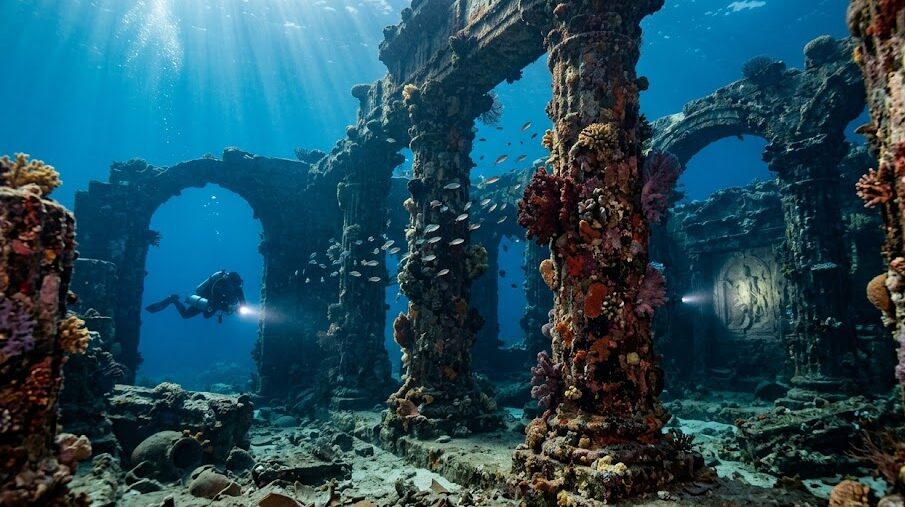
10 Amazing Underwater Cities: Lost Cities Beneath the Sea Scuba Divers Can Explore
Disclaimer: This post may contain affiliate links, meaning we earn a small commission if you make a purchase through our links, at no additional cost to you. As an Amazon Associate, I earn from qualifying purchases.
As a marine archaeologist and field explorer, I have spent years studying the dramatic ways our planet consumes its own history. There is a profound silence that greets you when you descend beneath the waves to explore ancient ruins. For centuries, tales of real cities underwater were dismissed as mere mythology, often overshadowed by the legendary lost city of Atlantis. However, modern underwater archaeology has proven that reality is far more compelling than myth.
Throughout history, natural disasters, rising sea levels, and catastrophic seismic events have claimed entire civilizations. Today, these amazing underwater cities offer an unprecedented time capsule. Preserved beneath the surface, protected from wind and rain, these submerged cities remain virtually untouched. Whether you are searching for the oldest known underwater settlements or planning to scuba dive through a sunken temple, this comprehensive list of underwater cities in the world will guide you through the most spectacular ancient underwater discoveries.
1. Port Royal, Jamaica: The Sunken Pirate Utopia Underwater
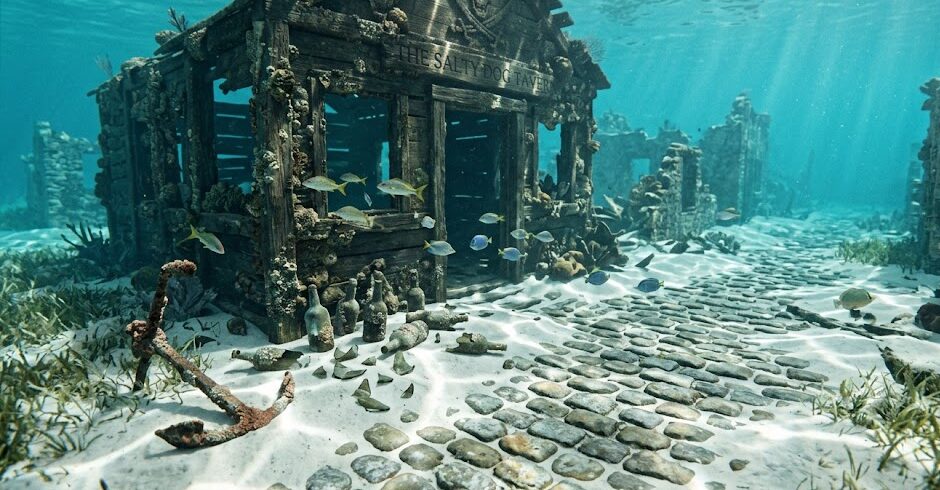
Once branded the most wicked port city on Earth, Port Royal was a notorious hub of commerce, rum, and pirate fleets in the Caribbean. However, on June 7, 1692, the sandy foundation of the city suffered a catastrophic failure. It is believed that an earthquake followed by a tsunami liquefied the ground, and in mere minutes, the ocean swallowed more than half of the fortified city.
Because Port Royal sank almost instantaneously, it became a tragic but perfectly preserved snapshot of 17th-century life. Excavation efforts have revealed taverns with bottles still upright and pocket watches frozen at the exact moment the city to sink met its fate. Today, the shallow waters in Jamaica make portions of this sunken city accessible to scuba divers, allowing you to float above cobblestone streets and a historic shipwreck.
2. Thonis-Heracleion, Egypt: The Lost Gateway to the Nile
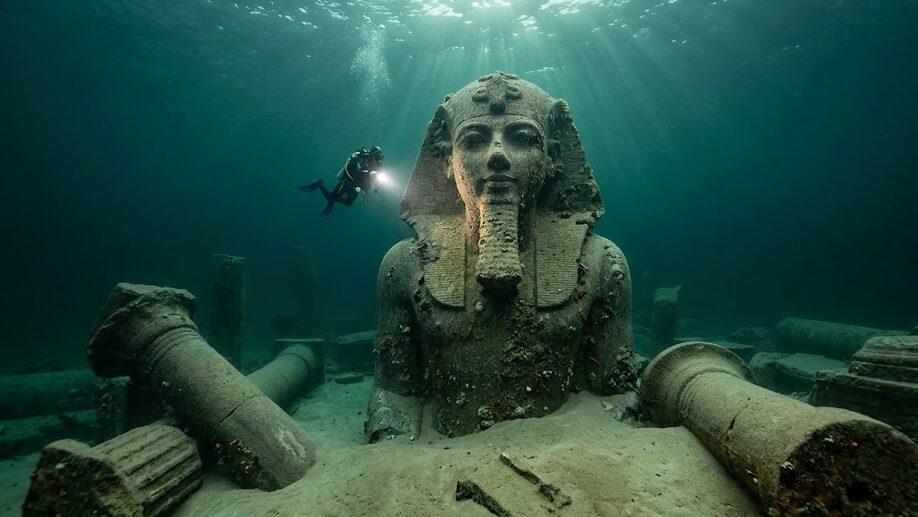
Long before Alexandria existed, the city of Thonis-Heracleion was the mandatory point of entry into Egypt. Mentioned by Herodotus, this vital Egyptian city was considered a myth until its astonishing rediscovery in the year 2000. Lying roughly 30 feet below the surface at the bottom of the sea, the ruins of Heracleion represent one of the greatest marine archaeology triumphs of our time.
Diving here is a surreal experience. Scuba divers can explore colossal 16-foot statues of pharaohs and intricate temple foundations scattered across the seafloor. The gradual sinking of this ancient city was caused by soil liquefaction and rising sea levels, permanently placing it beneath the sea.
3. Baiae, Italy: The Submerged Roman Resort
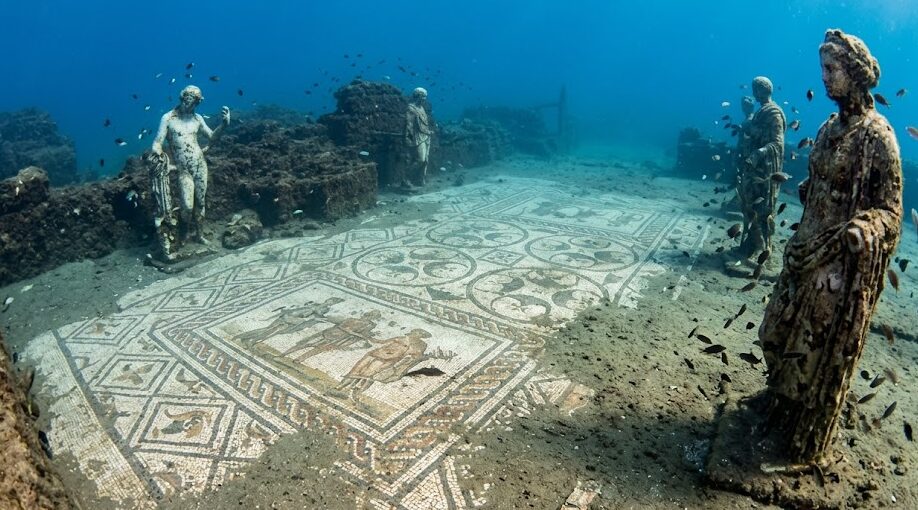
If ancient Rome had a Las Vegas, it was Baiae. Located near Naples, this coastal haven was the ultimate playground for ancient Romans. Emperors built lavish villas here to enjoy the volcanic hot springs. Ironically, the same underground volcanic activity (bradyseism) caused the land to slowly submerge over centuries.
Today, this area is a protected underwater archaeological park. Swimming through the Baiae archaeological park feels like flying over a submerged Pompeii. You can navigate through the remains of an ancient Roman villa, admire well-preserved mosaic floors, and examine statues that now serve as artificial reefs. It is easily one of the best-preserved underwater ruins in the Mediterranean.
4. Pavlopetri, Greece: The Bronze Age Marvel
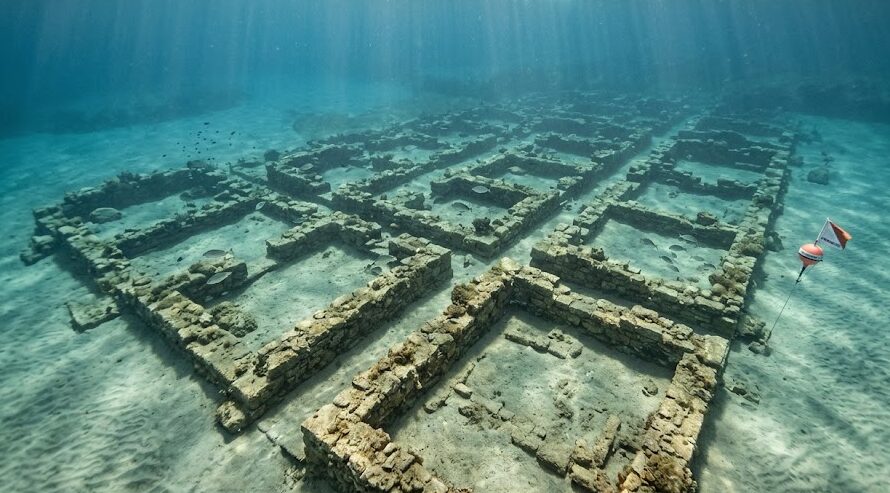
When we talk about the oldest known submerged settlement, Pavlopetri stands in a league of its own. Located off the coast of Laconia, Greece, this is the oldest sunken city in the world, dating back to around 1000 BCE during the Bronze Age. Unlike many underwater ruins that consist of isolated buildings, Pavlopetri has a nearly complete town plan, including streets, courtyards, and tombs.
The city was likely lost to a series of severe earthquakes. As a field educator, I always point out to students that Pavlopetri gives us unparalleled insight into ancient maritime trade, proving that ancient underwater cities hold answers to how early societies functioned.
5. Lion City (Shicheng), China: The Perfectly Preserved Metropolis
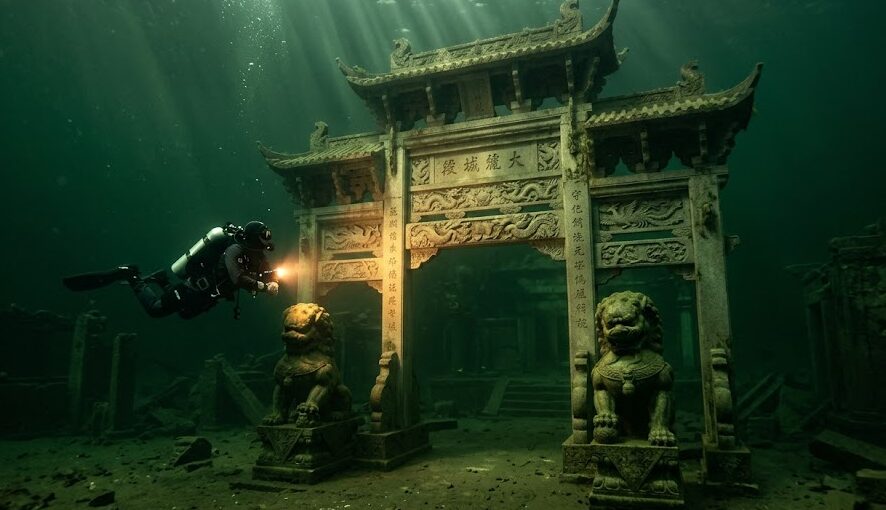
Not all submerged cities were claimed by nature; some were sacrificed for modern progress. The city of Shicheng, famously known as the Lion City, was intentionally flooded and submerged in the 1960s to make way for the Xin’an River hydroelectric dam project. Now resting beneath the waters of Qiandao Lake, this 600-year-old city remains untouched by wind or sun erosion.
Because the fresh water of Qiandao Lake preserves stonework exceptionally well, the intricate carvings of dragons, lions, and historical archways look almost exactly as they did centuries ago. It is a hauntingly beautiful dive, requiring advanced buoyancy control to navigate its narrow alleys without disturbing the silt.
6. Dwarka, India: The Legendary Submerged Kingdom
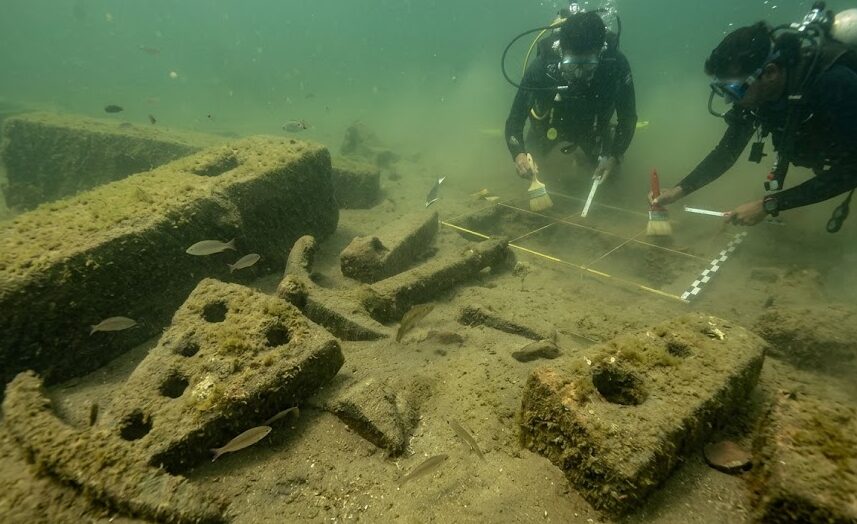
Steeped in Hindu mythology, the city of Dwarka is famously associated with Lord Krishna. For decades, the existence of a real ancient city was debated, until marine archaeologists discovered extensive underwater ruins in the Gulf of Khambhat. It is widely believed that an earthquake and tsunami caused it to sink thousands of years ago.
The exploration of Dwarka is a prime example of how ancient texts often hold geological truths. The massive stone anchors and geometric structures found here continue to challenge our understanding of ancient maritime history in India.
7. Yonaguni Monument, Japan: Nature’s Masterpiece or Ancient Ruins?
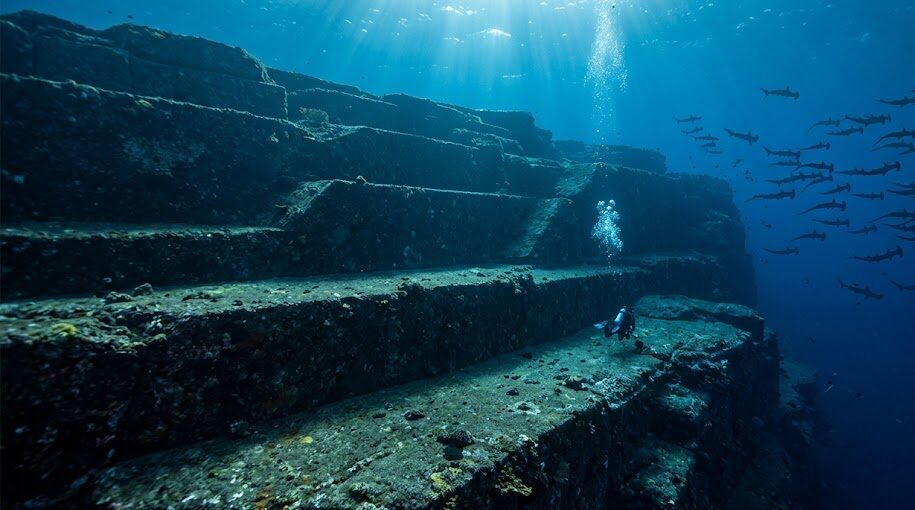
Discovered by a diver in 1986, the Yonaguni Monument in Japan is one of the most hotly debated underwater discoveries. Featuring massive terraced stones, sharp right angles, and stair-like structures, these underwater cities japan formations look incredibly artificial. While some geologists argue it is a natural tectonic formation shaped by ocean currents, many researchers believe it is the remains of a lost civilization.
Regardless of its origins, to scuba dive the Yonaguni Monument is an unforgettable experience, fighting strong drift currents to witness these monolithic steps firsthand.
8. Lake Titicaca, Bolivia/Peru: The High-Altitude Enigma
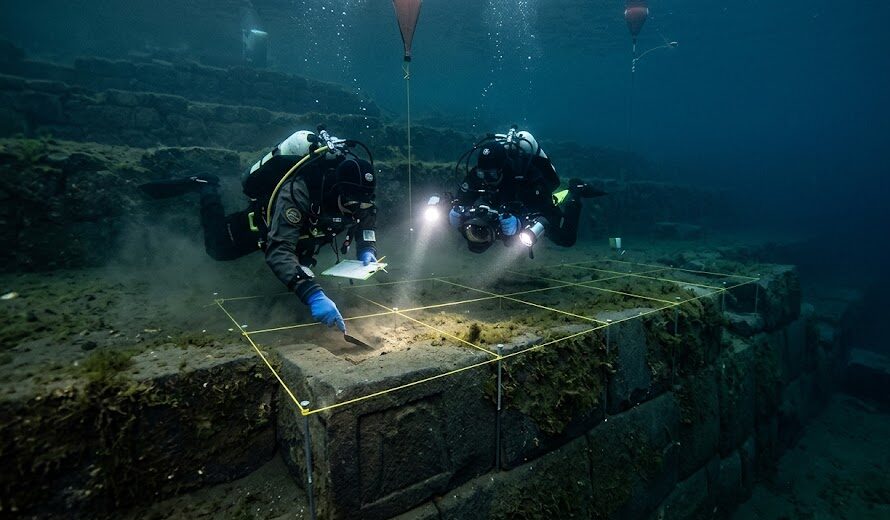
At over 12,000 feet above sea level, Lake Titicaca is not where you would expect to find sunken ruins. However, explorations beneath the surface have revealed an ancient temple, agricultural terraces, and a stone road belonging to the Tiwanaku culture. Changes in the lake’s water level over millennia eventually caused these sacred sites to submerge, offering a unique high-altitude archaeological puzzle.
9. Atlit Yam, Israel: The Neolithic Well
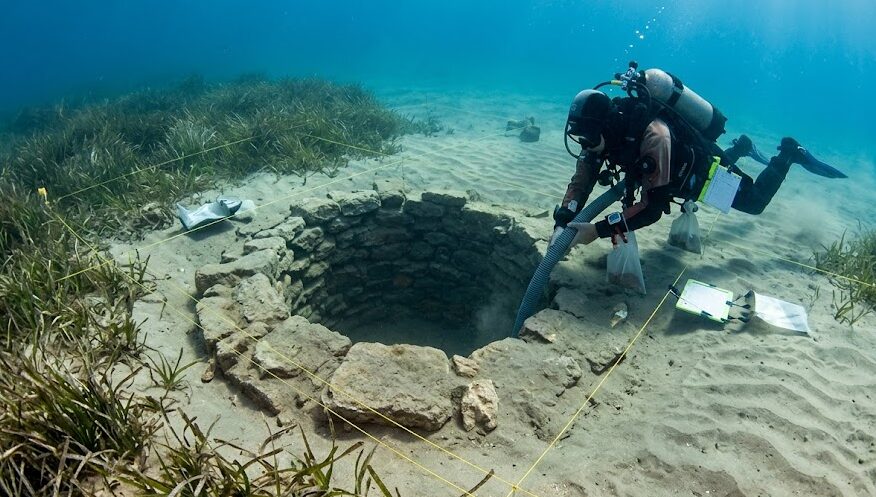
Off the coast of Israel lies Atlit Yam, one of the oldest known and largest submerged Neolithic villages. Dating back over 8,000 years, this site features rectangular houses, a stone semi-circle, and remarkably, the oldest known fresh-water well ever discovered. Rising sea levels slowly flooded the village, forcing its inhabitants to abandon it to the sea.
10. Village of Derwent, UK: The Drowned Valley
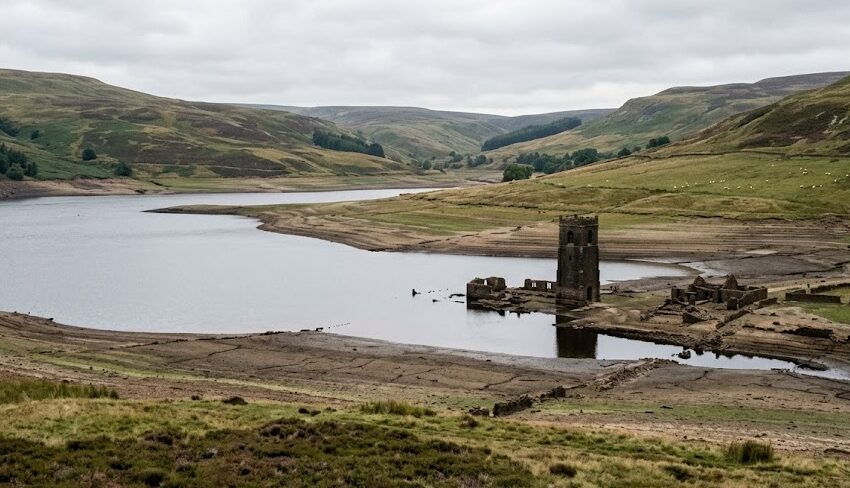
While not an ancient empire, the village of Derwent in Derbyshire, England, tells a poignant modern story. Much like Shicheng, this old city was purposefully flooded in the mid-20th century to create the Ladybower Reservoir dam. During extreme summer droughts, the water level drops low enough that the ruins of the village church and stone houses re-emerge, a stark reminder of the cities underwater that lie just out of sight.
From the mythical allure of Atlantis underwater cities to the tangible, breathtaking reality of Baiae and Thonis-Heracleion, these sites remind us of the immense power of our oceans. They are not just ruins; they are history preserved in water, waiting for the next generation of explorers to dive in.
*Editorial Note: The visual representations of the underwater ruins in this article are AI-assisted historical reconstructions. They are designed for educational purposes to help readers visualize these magnificent submerged archaeological sites based on current historical and geological data.