The Hidden Athens Archaeological Sites: Discovering Ancient Ruins in Athens’ Metro
Disclaimer: This post may contain affiliate links, meaning we earn a small commission if you make a purchase through our links, at no additional cost to you. As an Amazon Associate, I earn from qualifying purchases.
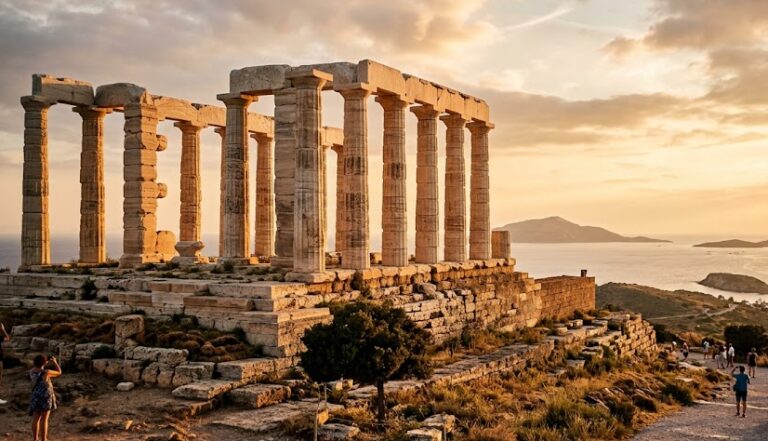
When you think of exploring the majestic capital of Greece, you likely envision walking up the steep hill to the Acropolis or wandering through the ancient Agora. However, some of the most fascinating Athens archaeological sites are not found under the Mediterranean sun, but rather deep underground. Beneath the bustling modern streets lies a hidden world where daily commuters walk side-by-side with history. Exploring the subterranean ancient ruins in Athens is an unforgettable experience that turns a simple subway ride into a journey back in time.
How the Subway Revealed the Most Unique Ancient Ruins in Athens
The creation of the Athens Metro network in the late 1990s and early 2000s was a monumental engineering challenge, primarily because the city rests upon layers of continuous human habitation spanning over 3,000 years. Every time engineers attempted to dig a new tunnel, they struck history.
This massive infrastructure project inadvertently became the largest archaeological excavation in the city’s modern history. Over 50,000 artifacts were unearthed during the digging process. Instead of moving all these treasures to distant museums, the city made a brilliant decision: they integrated the discoveries directly into the station designs. Today, these subterranean exhibits form the most unique ancient ruins in Athens, accessible to anyone with a standard subway ticket.
Syntagma Station: A Free Athens Archaeological Site Underground
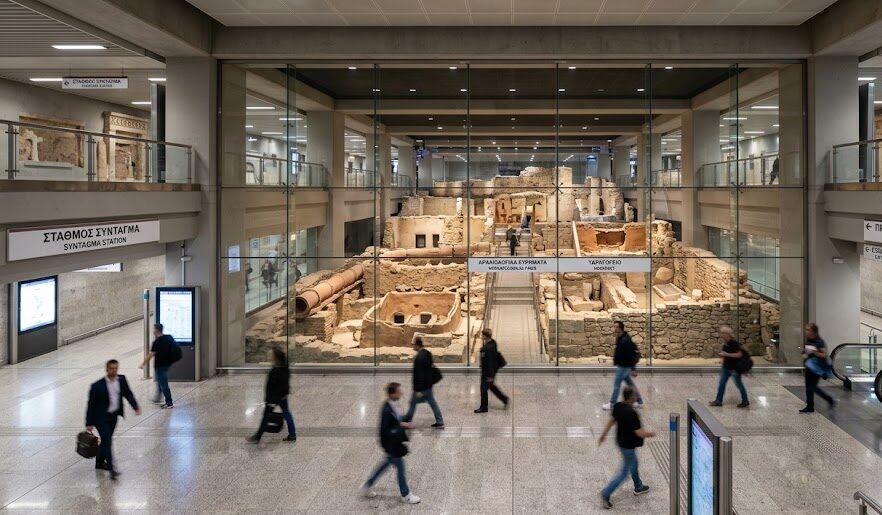
Syntagma Station, located beneath the central Syntagma Square and right across from the Hellenic Parliament, is the crown jewel of this underground museum network. Because it is the central hub of the metro system, it is often a traveler’s first introduction to an Athens archaeological site.
As you descend the escalators, you are greeted by massive glass displays embedded into the walls. Behind the glass, you can observe a perfectly preserved stratigraphic cross-section of the city’s history. You will see ancient Greek graves, classical aqueducts, and Ottoman-era clay pipes, all resting exactly where they were originally discovered. It is a stunning visual representation of how different civilizations built directly on top of one another.
Monastiraki Station: The Eridanos River Excavation
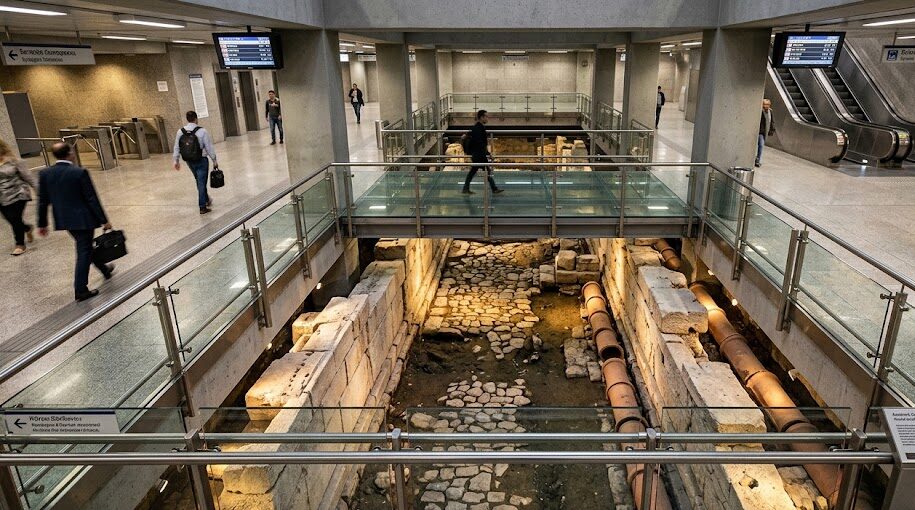
If you travel just a few stops away to Monastiraki Station, the historical immersion deepens. During the excavation for this station, workers discovered the riverbed of the ancient Eridanos River, a waterway that was referenced in classical texts but had been buried and lost for centuries.
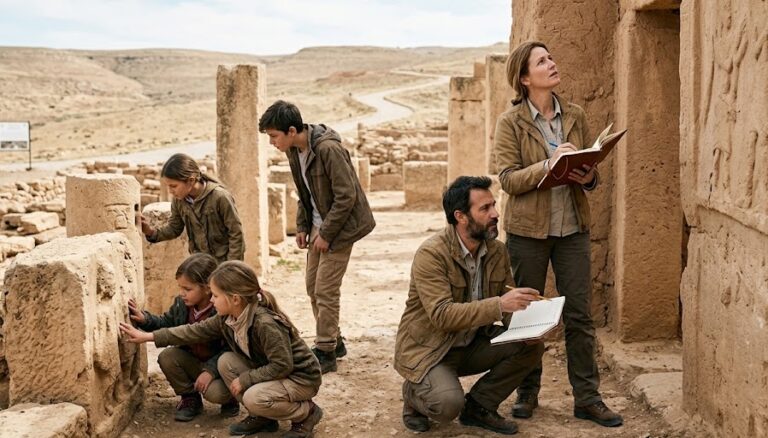
Today, passengers walking through Monastiraki can look down through large protective walkways and see the enclosed riverbed flowing through the classical ruins. The integration of the water system, ancient retaining walls, and modern railway infrastructure creates an incredible contrast. This is where the true magic of the traveling classroom comes alive, allowing you to witness ancient civil engineering in real-time.
Preserving Ancient Ruins in Greece: Why the Athens Metro is Unique
Balancing modern urban development with historical preservation is a delicate task, especially when dealing with ancient ruins in Greece. The Athens Metro sets a global standard for how this can be achieved successfully. By keeping the artifacts in their original locations (in situ) or displaying them in the exact stations where they were found, the historical context remains intact.
This approach ensures that the rich heritage of the region is not hidden away in a sterile warehouse, but rather remains a vibrant part of the daily life of Athenians and tourists alike. It is a testament to the immense respect the country has for its classical past.
Planning Your Visit to These Underground Historical Sites
To fully appreciate these underground wonders, you do not need an expensive guided tour. You simply need a standard Athens Metro ticket, which allows you to move freely between the stations.
- Take Your Time: Avoid the rush hours (8:00 AM and 5:00 PM) so you can stand and admire the display cases without being swept away by the crowds of daily commuters.
- Photography: Photos are completely allowed, so bring your camera to capture these beautifully lit artifacts.
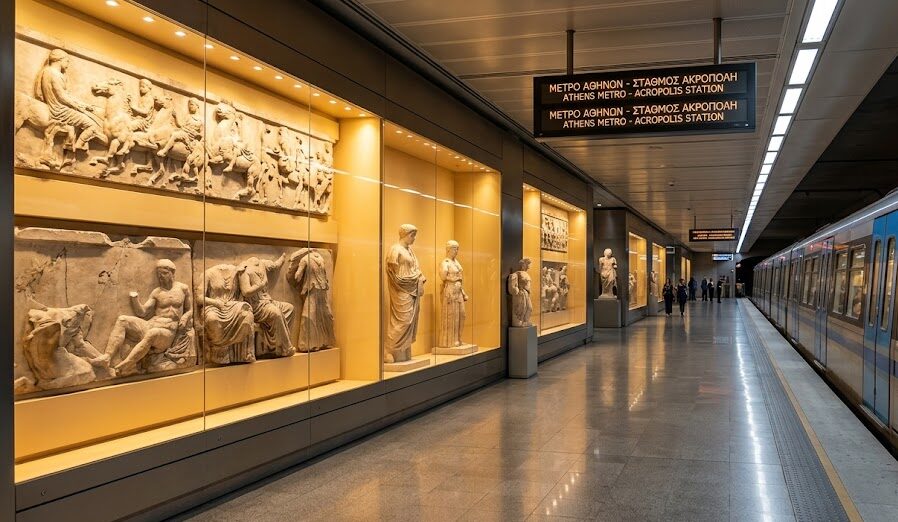
- Must-See Stops: Make sure to include Syntagma, Monastiraki, and the Acropolis station—which features replicas of the Parthenon sculptures—in your itinerary.
Turning a transit system into an educational adventure proves that learning never stops, especially in a city as timeless as Athens.
*Editorial Note: The visual representations of historical sites and underground museum exhibits in this article are AI-assisted reconstructions. They are designed for educational purposes to help readers visualize these magnificent archaeological sites based on current historical and excavation data.