
Digital Nomad in Chiang Mai: The Ultimate Remote Work Guide
Disclaimer: This post may contain affiliate links, meaning we earn a small commission if you make a purchase through our links, at no additional cost to you. As an Amazon Associate, I earn from qualifying purchases.
If you are planning to join the location-independent movement, you have undoubtedly heard of the “Mecca.” Long before remote work became a global standard, a quiet, mountainous city in northern Thailand was quietly building the ultimate infrastructure for digital workers. Today, being a digital nomad in chiang mai is almost a rite of passage for online entrepreneurs.
Working remotely is rarely as glamorous as sitting on a beach with a laptop. If you are managing complex Windows Server infrastructures, deploying high-level SEO keyword clusters in NEURONwriter, or running multiple WordPress publishing networks, you need serious stability. You cannot do deep work while fighting spotty Wi-Fi or swatting away sandflies. Unlike the rugged, off-grid nature of eco-tourism in Costa Rica, Chiang Mai offers a highly developed, frictionless environment designed specifically to make your online business thrive.
In this guide, we will break down exactly why this city remains the undisputed global capital for remote work, where you should live, and the gear you need to maximize your productivity.
📌 Key Takeaways (TL;DR)
- The Hub of the Hubs: Chiang Mai is the global capital for remote work due to its unbeatable triad: cheap cost of living, blazing-fast internet, and a massive networking community.
- Where to Live: Choose Nimmanhaemin (Nimman) for modern condos and high-end coworking spaces, or the Old City for a slower, more traditional cultural experience.
- The Burning Season: You must leave the city between late February and April. Agricultural fires cause the air quality to become toxic and hazardous during these months.
- Water Safety: Tap water in Thailand is unsafe to drink. You must rely on bottled water or a premium water purifier bottle.
You’ll see…
Why Chiang Mai is the Undisputed Capital
As detailed in our broader digital nomad Southeast Asia guide, the region is packed with incredible hubs like Bali and Da Nang. However, Chiang Mai stands completely on its own due to three massive pillars:
- The Infrastructure: Chiang Mai possesses lightning-fast, incredibly stable fiber-optic internet. Nearly every cafe and condo building is wired for high speeds, and the city boasts dozens of premium 24/7 coworking spaces.
- The Cost of Living: You can rent a fully furnished, modern studio condo (complete with a gym, rooftop pool, and security) for $300 to $500 USD a month. A massive plate of delicious Pad Thai from a street vendor costs roughly $1.50 USD.
- The Community: The networking opportunities here are staggering. On any given night, there are crypto meetups, affiliate marketing masterminds, and SaaS developer workshops. If you are a family navigating worldschooling, there is a massive community of expat parents to connect with.
Where to Live: Nimman vs. The Old City
When you arrive in Chiang Mai, you will generally choose between two primary neighborhoods, each offering a completely different vibe.
Nimmanhaemin (Nimman)
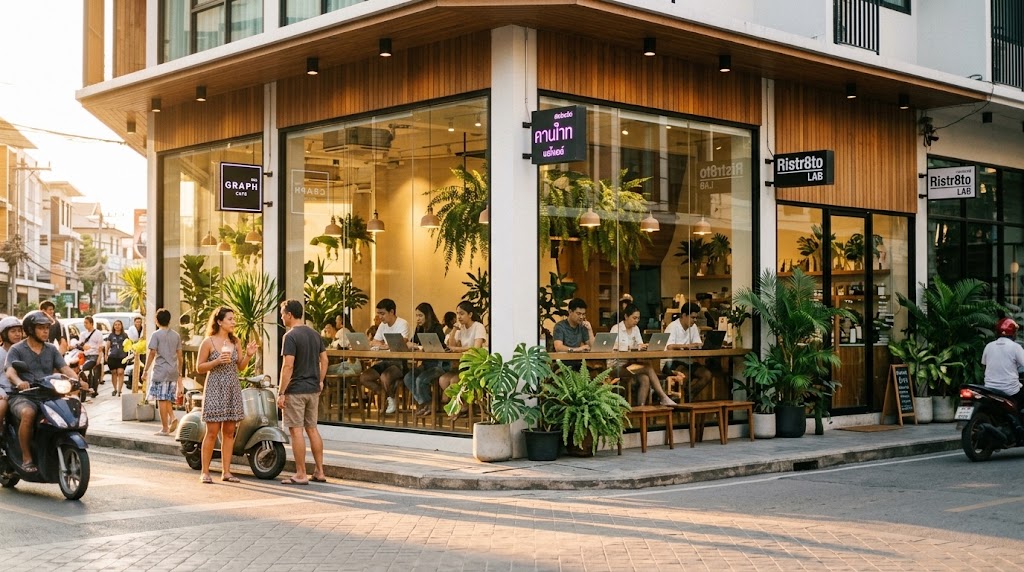
This is the modern, trendy epicenter of the digital nomad scene. Nimman Road is packed with boutique coffee shops, the massive Maya Lifestyle Shopping Center, high-end gyms, and modern condo buildings. If you want to step out of your apartment and be inside a world-class coworking space within a three-minute walk, Nimman is your target. It is slightly more expensive, but the convenience is unbeatable.
The Old City
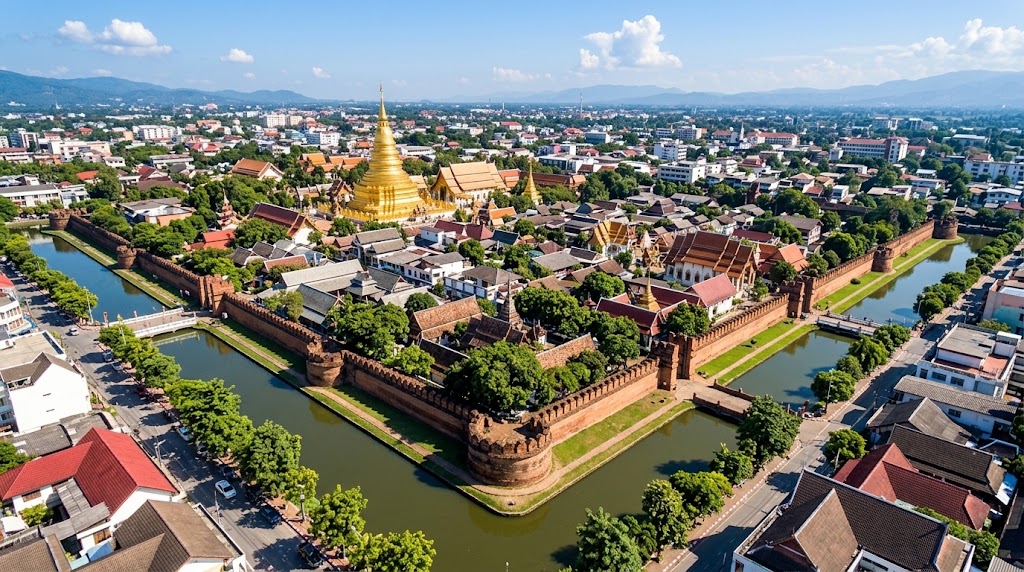
Surrounded by an ancient red brick wall and a water moat, the Old City is the cultural heart of Chiang Mai. It is home to stunning, centuries-old Buddhist temples, bustling night markets, and traditional Thai wooden architecture. The pace here is much slower, the cafes are more rustic, and the rent is generally cheaper than in Nimman.

Visas and Logistics
Thailand has historically been strict about long-term stays, forcing nomads to do frequent “visa runs” to neighboring countries like Laos or Myanmar. However, the Thai government has recently introduced more accommodating long-term visa options, such as the DTV (Destination Thailand Visa), specifically targeting remote workers, freelancers, and digital nomads, allowing them to stay legally for extended periods without the constant anxiety of border runs.

Health, Safety, and the “Burning Season”
Chiang Mai is incredibly safe. Violent crime is practically non-existent, and you can comfortably walk home late at night. The biggest physical danger by far is renting a scooter without proper experience; the traffic is chaotic, and accidents are the number one cause of injury for expats.
Regarding health, the tap water in Thailand is not safe to drink. You must rely entirely on bottled water or filtration systems for drinking and brushing your teeth.
Finally, you must be aware of the “Burning Season.” Between late February and mid-April, local farmers burn their fields to prepare for the next harvest. Because Chiang Mai is located in a valley, the toxic smoke gets trapped, creating some of the worst air quality levels on the planet. The vast majority of digital nomads leave the city entirely during these two months, often migrating south to the Thai islands.

Building the Ultimate Remote Workspace
To succeed as a digital nomad in chiang mai, you must treat your workspace with professional respect. Relying on a single laptop screen while sitting on a cheap wooden cafe stool will quickly destroy your posture and your productivity.
The best coworking spaces in the city—such as Punspace, Yellow, and Camp (located at the top of the Maya Mall)—offer ergonomic chairs, standing desks, and private Skype booths. Many nomads choose to rent monitors directly from these spaces. However, if you prefer jumping between different cafes or working from your condo, carrying your own portable, dual-monitor setup in your backpack is a total game-changer for deep, focused work.
GRAYL GeoPress 24 oz Water Purifier Bottle
Because tap water in Thailand is unsafe to drink, you will waste a massive amount of money and generate terrible plastic waste buying bottled water every single day. The GRAYL GeoPress is the ultimate nomad hack. Unlike basic filters, this hardcore purifier actually removes global waterborne pathogens (virus, bacteria, protozoan cysts), allowing you to safely drink directly from any tap in Southeast Asia in just 8 seconds.
Check Current Price on AmazonFrequently Asked Questions
Is it expensive to live in Chiang Mai?
No, it is highly affordable. A single person can live a very comfortable lifestyle—renting a modern condo, eating out daily, paying for a coworking membership, and renting a scooter—for around $1,000 to $1,300 USD per month.
Do I need a scooter to get around Chiang Mai?
It is highly recommended but not mandatory. If you live and work strictly in the Nimman neighborhood, you can walk almost everywhere. For longer trips, the “Grab” app (Asia’s version of Uber) is incredibly cheap and reliable. However, renting a scooter (about $80-$100 USD/month) gives you total freedom.
When is the best time to visit Chiang Mai?
The best time is between November and February. The weather is cool, dry, and pleasant. You must avoid the “Burning Season” from late February to April, as the air pollution reaches hazardous levels.
Is the internet fast enough for video calls?
Absolutely. The internet infrastructure in Chiang Mai is world-class. You will regularly find Wi-Fi speeds exceeding 200 Mbps in cafes and coworking spaces, making high-definition video calls and heavy server uploads perfectly stable.