Gobi Desert Mongolia: Interesting Facts About the Gobi
Disclaimer: This post may contain affiliate links, meaning we earn a small commission if you make a purchase through our links, at no additional cost to you. As an Amazon Associate, I earn from qualifying purchases.
The gobi desert is a massive, arid region spanning across southern mongolia and northern China. Known for its breathtaking landscapes, the mongolian gobi is not just an empty wasteland; it is a vibrant ecosystem teeming with unique wildlife, ancient dinosaur fossils, and deep-rooted nomadic traditions. Whether you are planning tours to the gobi desert or simply searching for interesting facts about the gobi, this vast desert offers an unparalleled glimpse into one of the most extreme environments on Earth.
📌 Key Takeaways (TL;DR)
- Geographical Giant: The gobi desert is the largest desert in Asia, covering over 500,000 square miles across Mongolia and China.
- A Cold Desert: Unlike the Sahara, the Gobi is a cold desert, with winter temperatures plummeting to -40°F (-40°C).
- Dinosaur Goldmine: The flaming cliffs within the desert yielded the world’s first discovery of fossilized dinosaur eggs.
- Unique Wildlife: It is home to rare species, including the wild bactrian camel, snow leopards, and the critically endangered gobi bear.
Table of Contents
What is the Gobi Desert?
The gobi desert is a vast, rain-shadow desert formed by the Tibetan Plateau blocking precipitation from the Indian Ocean, characterized mostly by bare rock rather than sand dunes.
The mongolian word “Gobi” translates to “waterless place,” which perfectly captures the essence of this arid desert. However, the desert landscape is incredibly diverse. Spanning from inner mongolia in China to the south gobi province (Ömnögovi), this vast desert consists of varying terrains, including the gobi desert steppe, gravel plains, and rugged mountain range formations.
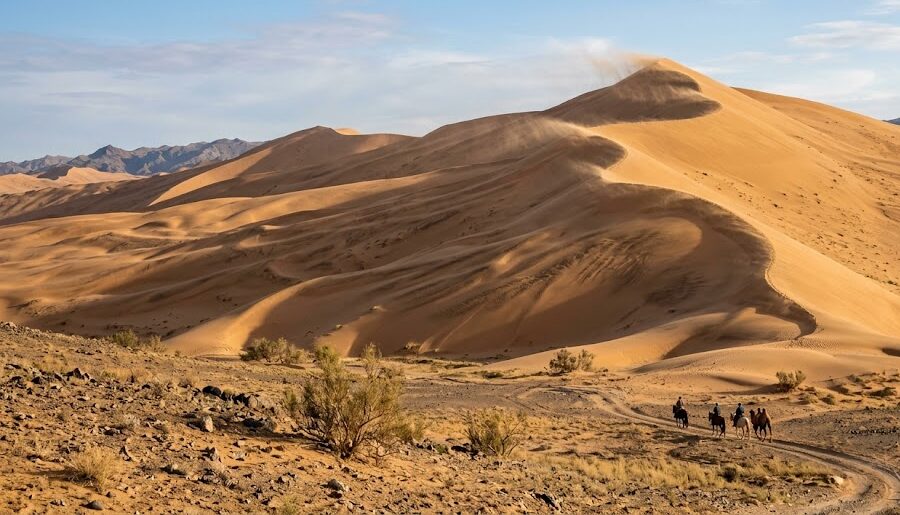
While many picture endless oceans of sand, less than 5% of the gobi desert mongolia is actually covered in sand dunes. The majority of the desert area is made up of exposed rock, semi-desert steppes, and a hardpan surface that historically allowed travelers on the Silk Road to cross with relative ease.

Osprey Atmos AG 65 Men’s Backpacking Backpack
- Anti-Gravity suspension for maximum ventilation
- Multiple access points for easy gear organization.
The Harsh Climate of the Cold Desert
The harsh climate of the Gobi makes it a cold desert, experiencing extreme temperature shifts due to its high elevation and high northern latitude.
Throughout the gobi desert, temperatures fluctuate wildly. In the summer, the southern mongolia region can bake in heat exceeding 122°F (50°C). Yet, because it sits on a high plateau (averaging 3,000 to 5,000 feet above sea level), winter brings brutal Siberian winds. Frost and snow occasionally cover the desert, and temperatures can drop incredibly fast within a single 24-hour period.
This expansion of the desert environment requires highly specialized adaptation for any flora and fauna trying to survive in these parts of mongolia. The harsh climate of this cold desert not only shaped the unique wildlife but also forged the resilient nomadic culture that eventually gave rise to the mighty Mongol Empire, the largest contiguous land empire in history.
Flora and Fauna: Life in the Gobi
Despite being a barren wasteland in appearance, the desert ecosystem supports highly adapted wild animals and specialized desert vegetation that rely on sparse oasis formations.
Rare Mammals and Nomadic Herds
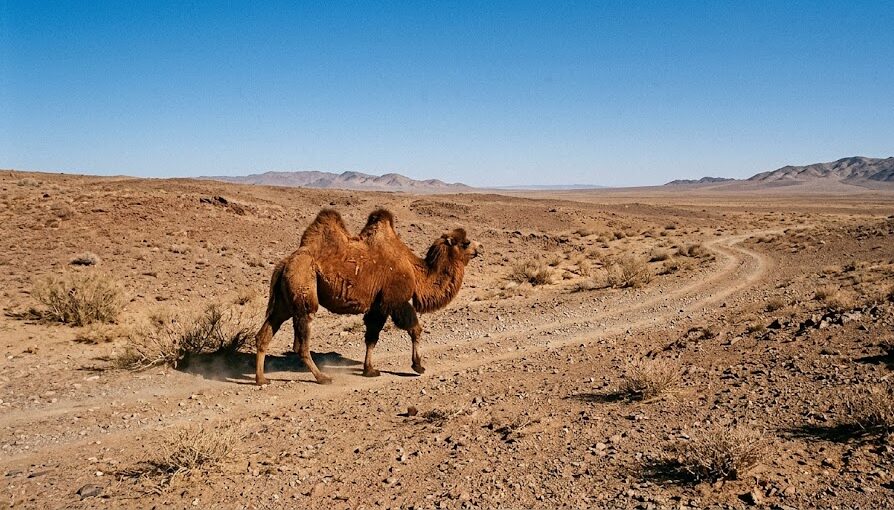
The people and wildlife of the region have adapted perfectly. Nomadic herders have traversed this land for centuries, relying on the two-humped bactrian camel. While domesticated herds are common, the true marvel is the critically endangered wild bactrian camel, one of the few mammals capable of drinking saltwater.
The gobi is also home to the elusive gobi bear (Mazaalai), the only bear species that lives in the gobi desert. Alongside them, you can find snow leopards roaming the gobi altai range, ibex, and gazelles sprinting across the steppe.
Desert Plants and Vegetation
Vegetation is scarce but resilient. The most vital among desert plants is the saxaul tree. This incredible plant stores water in its spongy bark and roots deep into the ground, holding the soil together and preventing further desertification. Its wood is so dense it sinks in water, and it provides essential fuel for local families surviving the winter.

CamelBak M.U.L.E. Hydration Backpack
- 3-liter Crux reservoir for extreme arid environments.
- Lightweight and narrow profile for trail stability.
Paleontological Wonders: Dinosaurs of the Flaming Cliffs
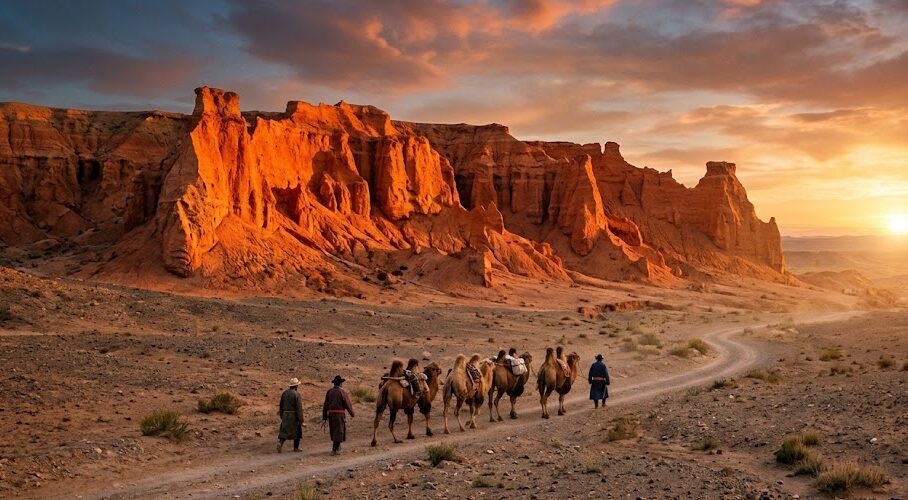
The flaming cliffs (Bayanzag) is a renowned paleontological site in the mongolian gobi where the first scientifically recognized dinosaur eggs were discovered in the 1920s.
During an expedition to the gobi desert sponsored by the american museum of natural history, the famous american explorer roy Chapman Andrews made history. Explorer roy chapman andrews and his team unearthed an unprecedented treasure trove of fossil remains.
Millions of years ago, this part of the gobi was a lush, prehistoric habitat. The reddish-orange sandstone formation of the cliffs glows brilliantly at sunset, hence the name. Andrews’ discoveries proved that dinosaurs laid eggs, changing our understanding of these ancient creatures forever. Today, any trip to mongolia is incomplete without walking the very ground where these massive beasts roamed over 70 million years ago.
Exploring the Gobi Altai and the Valleys
The gobi altai is a formidable mountain range that cuts through the desert, creating deep gorges like the Yol valley, which surprisingly houses thick ice fields for most of the year.
Within the gobi gurvan saikhan national park, the landscape shifts dramatically. The Yol valley (Eagle Valley) narrows so deeply that the sun rarely reaches its floor, allowing ice to remain frozen even during the hot summer months.
Further into the great gobi, travelers encounter the Khongoryn Els, often called the “Singing Sands.” These massive sand dunes can reach up to 300 meters high. When the wind blows, the shifting sands create a distinct, low-frequency hum, an auditory marvel that echoes across the basin.
Tours to the Gobi Desert: Planning Your Expedition
If you are planning tours to the gobi desert, preparation is key. A standard expedition through the mongolian gobi desert requires rugged 4×4 vehicles, robust camping equipment, and local guides who understand the shifting terrain of the eastern gobi and western gobi.
Most itineraries will include visits to an oasis, homestays with nomadic families to experience their hospitality, and camel trekking across the dunes. Ensure your gear includes high-SPF sun protection, windbreakers, and high-quality hydration bladders.
Facts About the Gobi Desert
Here are the most frequently asked questions and facts about the gobi desert for travelers and researchers alike.
Is the Gobi Desert the largest desert in the world?
No, while it is a large desert and the biggest in Asia, it ranks as the sixth largest desert in the world, behind the Antarctic, Arctic, Sahara, Arabian, and Patagonian deserts.
What does the word Gobi mean?
The word gobi is a mongolian word that translates directly to “waterless place” or “semi-desert.”
What kind of camel lives in the Gobi?
The Gobi is famous for the bactrian camel, easily identifiable by its two humps. Both domesticated and highly endangered wild bactrian camels roam the region.
Is the Gobi Desert expanding?
Yes, the desert is expanding south into China due to climate change and overgrazing, a process known as desertification.