Is Patagonia a Country? The Fascinating History of the End of the World
Disclaimer: This post may contain affiliate links, meaning we earn a small commission if you make a purchase through our links, at no additional cost to you. As an Amazon Associate, I earn from qualifying purchases.
When people hear the word “Patagonia,” a few specific images usually come to mind: an expensive brand of outdoor clothing, towering granite mountain peaks, and massive blue glaciers. Because of its legendary status among travelers and its distinct cultural identity, one of the most frequently searched questions on the internet is: is patagonia a country?
It is easy to understand the confusion. Patagonia has a distinct flag (unofficially used by locals), a unique ecosystem, and a fierce, frontier-like independence that feels completely separate from the bustling capital cities of Buenos Aires and Santiago. If you enjoy diving into the past—whether you are exploring maritime museums or researching the 16th-century history on St. Augustine, Florida—the history of how this region was discovered, named, and eventually divided is a thrilling tale of survival and exploration.
In this article, we will definitively answer whether Patagonia is a country, explore the myth of its indigenous “giants,” and explain how it became the ultimate adventure destination.
📌 Key Takeaways (TL;DR)
- Not a Country: Patagonia is a vast geographical region covering over 400,000 square miles, politically divided between Chile and Argentina.
- The Name’s Origin: The region was named by Ferdinand Magellan in 1520 after he encountered the indigenous people, whom he believed were mythical giants (“Patagones” or Big Feet).
- Indigenous Roots: Long before European explorers arrived, the harsh environment was inhabited by resilient tribes like the Tehuelche, Mapuche, and Selk’nam.
- The Modern Border: Chile and Argentina officially divided the territory in 1881, using the highest peaks of the Andes mountains as the natural boundary.
You’ll see…
Is Patagonia a Country? The Short Answer
To put the geographical debate to rest: No, Patagonia is not a country.
Patagonia is a vast geographical region located at the very southern tip of South America. It is politically divided and governed by two independent nations: Argentina and Chile.
To put its immense size into perspective, if Patagonia were an independent country, it would be the 24th largest in the world. Covering over 400,000 square miles (over 1 million square kilometers), it is roughly the same size as the vast steppes of the Mongolia Empire today. The majestic Andes mountain range acts as the natural border, slicing the region vertically into two halves. Argentina claims the arid eastern steppes, while Chile controls the wet, rugged western fjords.

The Origins: Who Lived in Patagonia First?
Long before hikers began packing their bags using a Patagonia trekking packing list, this harsh environment was home to several incredibly resilient indigenous groups.
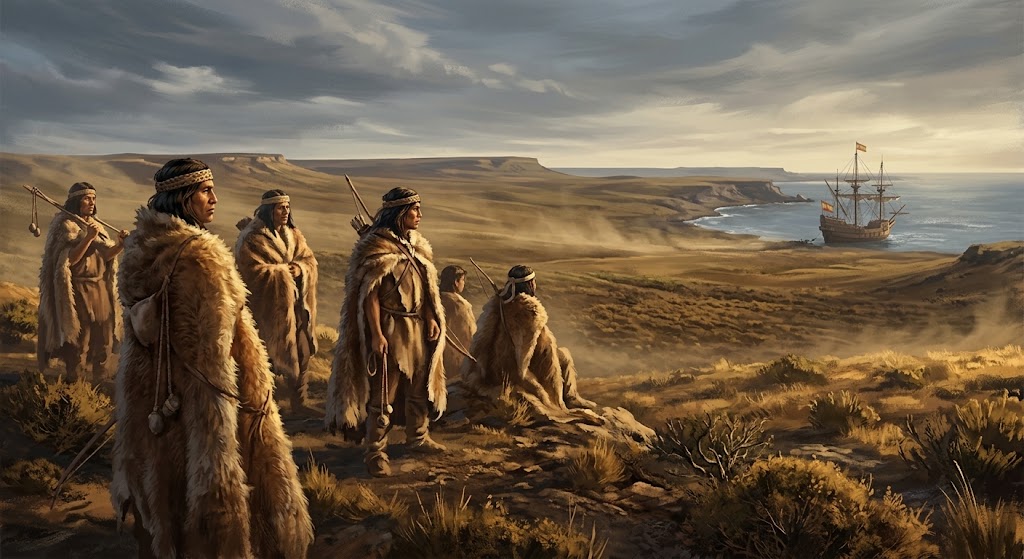
Human habitation in Patagonia dates back over 10,000 years. The most prominent groups were the Tehuelche (who roamed the vast eastern steppes hunting guanacos), the Mapuche (who fiercely defended their territories in the north), and the Selk’nam and Yaghan (who inhabited the freezing southern archipelagos of Tierra del Fuego).
These nomadic tribes were master survivors. The Selk’nam, for example, lived in one of the coldest inhabited places on Earth, yet they famously wore very little clothing, relying instead on animal fats smeared across their bodies to insulate them from the freezing winds.
Ferdinand Magellan and the Myth of the Giants
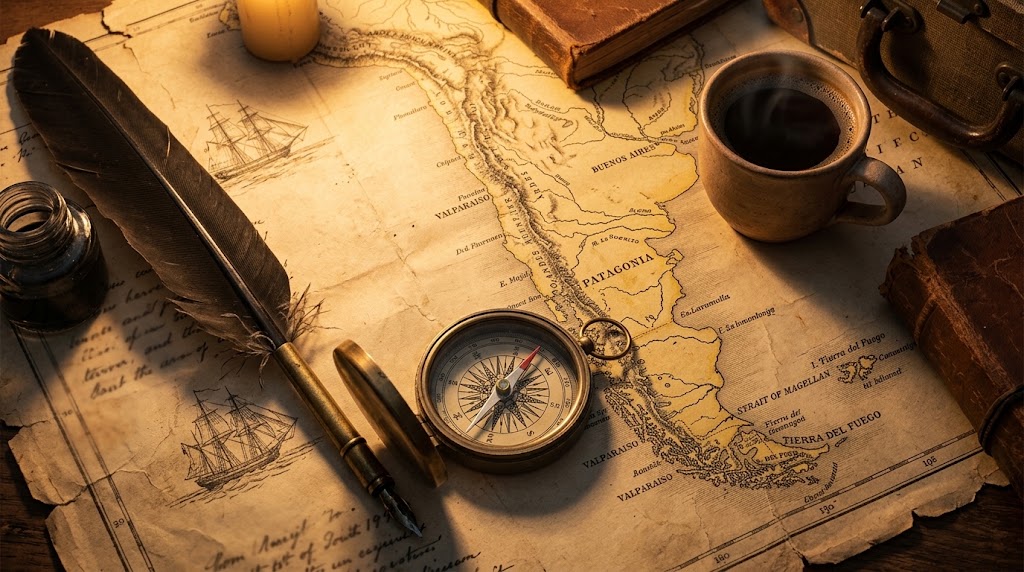
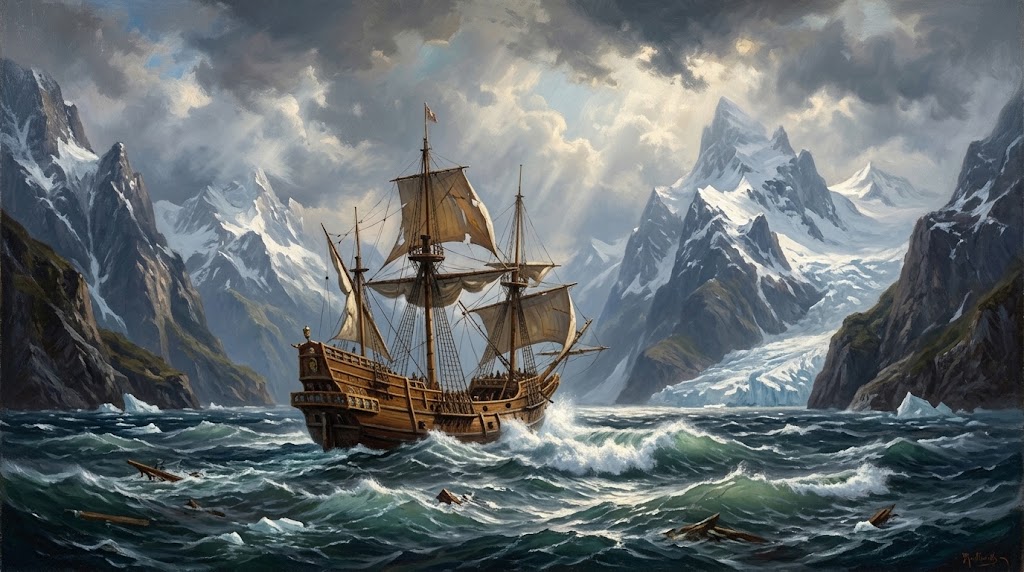
The recorded patagonia history changed forever in 1520 during the Age of Discovery. The Portuguese explorer Ferdinand Magellan (navigating for the Spanish Crown) was leading the first expedition to circumnavigate the globe. Searching for a passage connecting the Atlantic and Pacific oceans, he dropped anchor on the Patagonian coast.
When Magellan and his crew encountered the local Tehuelche people, they were astounded. The Spanish sailors of the 16th century averaged about 5 feet 1 inch (1.55m) in height. The Tehuelche, due to their rich protein diet of meat, were remarkably tall, averaging over 6 feet (1.8m).
Magellan’s chronicler, Antonio Pigafetta, wrote exaggerated accounts claiming the natives were mythical giants. Magellan named them Patagones, which most historians believe translates to “Big Feet” (likely referencing the oversized guanaco-skin boots the natives wore to survive the winter). Thus, the entire region was forever branded as Patagonia—the Land of the Big Feet.
The Modern Division: How Chile and Argentina Split the Land
For centuries after Magellan’s arrival, Patagonia remained a wild, untamed frontier. The Spanish empire established a few coastal settlements but largely failed to conquer the deep interior, as the indigenous Mapuche and Tehuelche fiercely resisted colonization.
It wasn’t until the late 19th century that the modern nations of Chile and Argentina decided to officially claim and divide the territory. In 1881, the two countries signed the Boundary Treaty. The agreement established a seemingly simple rule: the border would follow the highest peaks of the Andes mountains that divide the water drainage (watersheds flowing to the Pacific belonged to Chile, and to the Atlantic belonged to Argentina).
Tragically, the subsequent military campaigns by both governments to secure these lands (such as Argentina’s “Conquest of the Desert”) led to the brutal displacement and near-extinction of the indigenous Patagonian tribes.
Exploring Patagonia Today
Today, the wild frontier of Magellan and the Tehuelche has been transformed into one of the premier eco-tourism destinations on the planet. Whether you are wondering where to go in Patagonia to see the advancing ice of the Perito Moreno Glacier in Argentina, or wanting to hike the grueling W Trek in Chile’s Torres del Paine, the region still demands the same respect from modern travelers as it did from 16th-century explorers.
While it may not be an independent country on a political map, Patagonia’s untamed winds, vast distances, and awe-inspiring landscapes create a world entirely of its own.
In Patagonia by Bruce Chatwin (Book)
If there is one book you must read before boarding a flight to South America, it is this one. Bruce Chatwin’s masterpiece single-handedly reinvented modern travel literature. It is a mesmerizing, beautifully written journey through the history, outlaws (including Butch Cassidy), myths, and landscapes of the region. It will make you look at the Patagonian steppe not as an empty desert, but as a land full of ghosts and legends.
Check Current Price on AmazonFrequently Asked Questions About Patagonia’s History
Is Patagonia a country?
No, Patagonia is not a country. It is a massive geographical region located at the southern end of South America, shared and governed by two independent countries: Argentina and Chile.
Why is it called Patagonia?
The name comes from the word “Patagones.” In 1520, the explorer Ferdinand Magellan used this term to describe the indigenous Tehuelche people, whom his crew believed to be giants due to their tall stature and the oversized animal-skin boots they wore.
Who owns Patagonia?
Patagonia is owned by Argentina and Chile. The Andes mountains generally act as the dividing border. Argentina owns the eastern portion (which is larger and characterized by arid steppes), while Chile owns the western portion (characterized by green fjords and temperate rainforests).
Are there still indigenous people in Patagonia?
Yes, but their populations are very small. The Mapuche people are the largest surviving indigenous group in the northern regions of Patagonia. Tragically, groups like the Selk’nam and Tehuelche were largely wiped out by European diseases and violent government expansion campaigns in the late 19th century.
What is Tierra del Fuego?
Tierra del Fuego (Land of Fire) is an archipelago at the extreme southern tip of Patagonia. It was named by Magellan because he saw the constant bonfires kept burning by the indigenous Yaghan and Selk’nam people along the coast to stay warm.